How to Avoid Them?
When you are facing an urgent financial emergency, finding a fast online loan can be a lifesaver. However, the pressure to secure cash quickly can make even the most cautious borrowers vulnerable to online loan scams. Imposter lenders and fraudulent websites frequently target individuals searching for fast approval, bad credit loans, or emergency relief.
To protect your hard-earned money and sensitive personal information, you need to know how to separate legitimate financial institutions from sophisticated scams.
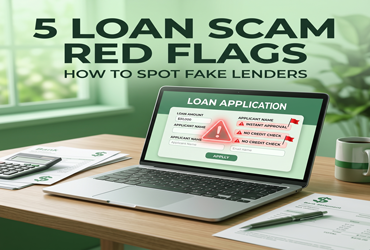
Before hitting "Submit" on any online application, look out for these 5 major red flags of online loan scams and learn the exact steps to verify a lender's legitimacy.
Red Flag 1: Demanding Upfront Fees Before Funding
This is the single most common sign of an online loan scam (often referred to as an "advance-fee loan scam").
How the Scam Works: The fraudulent lender approves your application quickly but claims you must pay a "processing fee," "origination fee," "insurance deposit," or "first-month collateral" before they can disburse the funds into your bank account. Once you send the payment, the lender vanishes, and you never receive the loan.
The Legitimate Practice: Reputable online lenders never ask for upfront payment in cash, wire transfer, or gift cards. While real lenders do charge processing or origination fees, these fees are deducted directly from your total loan amount after approval, or built into your monthly installment payments.
Red Flag 2: "100% Guaranteed Approval" with No Credit Check
While many online subprime lenders specialize in providing options for bad credit, no legitimate lender can guarantee approval before reviewing your financial background.
How the Scam Works: Scammers lure desperate borrowers with phrases like "100% Guaranteed Approval," "No Credit Check Required," or "Instant Approval for Everyone."
The Legitimate Practice: Responsible underwriting is legally required. Even lenders that do not focus heavily on traditional credit scores will still perform a "soft" credit pull or use digital systems to verify your income, active checking account, and employment. A lender that promises cash with zero verification is either running a scam or harvesting your personal data to sell on the dark web.
Red Flag 3: High-Pressure Tactics and Unsolicited Offers
Scammers rely on creating an artificial sense of urgency so you act on emotion rather than logic.
How the Scam Works: You receive an unexpected text message, WhatsApp notification, or cold email stating you have been pre-approved for $5,000. When you contact them, the agent insists that the offer is "only valid for the next two hours" or demands that you sign documents immediately.
The Legitimate Practice: Legitimate financial institutions do not pressure you to sign a contract instantly. They provide full disclosures, including the clear breakdown of the Annual Percentage Rate (APR), interest terms, and repayment schedules, giving you ample time to review the details.
Red Flag 4: Untraceable Payment Demands
How a lender asks you to send or receive money tells you everything you need to know about their legitimacy.
How the Scam Works: If the "lender" asks you to pay fees or make repayments via wire transfers (Western Union/MoneyGram), cryptocurrency (Bitcoin), peer-to-peer apps (Venmo/Zelle to a personal name), or prepaid gift cards (iTunes/Amazon), stop immediately. These payment methods are virtually untraceable and non-refundable.
The Legitimate Practice: Genuine online lenders process transactions through secure, encrypted bank transfers (ACH deposits) directly into your verified checking account under the official corporate name of the lending company.
Red Flag 5: Missing State Licensing and Physical Address
Legitimate lending operations in the United States must be registered and licensed in every state where they conduct business.
How the Scam Works: The lender's website features generic stock images, lacks a physical street address, or lists a P.O. Box. Their contact information consists only of a web contact form or a Gmail/Yahoo email address (e.g., approval-department24@gmail.com).
The Legitimate Practice: A real lender will prominently display its physical office address, customer support line, and state licensing disclosures on its website footer.
How to Verify a Lender Before Applying
If you are unsure whether an online lender is real, complete this quick 3-step verification process:
Check the State Regulator: Visit your state’s official financial regulation department website (e.g., Department of Financial Protection and Innovation) and search their public database to verify if the company holds an active lending license.
Verify the SSL Security Certificate: Ensure the website URL begins with https:// (not http://) and features a padlock icon in the browser address bar. This ensures your data is encrypted.
Cross-Reference Reviews: Look up the company on the Better Business Bureau (BBB) website and Trustpilot. Read independent consumer reviews rather than relying solely on testimonials printed on the lender’s own homepage.
What to Do If You Have Been Scammed
If you suspect you have given your information or money to a fraudulent lender:
Contact Your Bank Immediately: Freeze your accounts, block pending transfers, and request new debit/credit cards.
Freeze Your Credit: Contact the three major credit bureaus (Equifax, Experian, TransUnion) to place a fraud alert or credit freeze on your profile to prevent unauthorized accounts from being opened in your name.
Report the Fraud: File an official complaint with the Federal Trade Commission (FTC) at ReportFraud.ftc.gov and report the incident to your local state Attorney General's office.
Conclusion
Finding fast financing when you need it most shouldn't come at the cost of your financial security. By preparing your documentation carefully with a complete loan application checklist, comparing structured installment loans vs payday loans, and staying alert to these five red flags, you can navigate the online lending landscape safely and secure the funding you need with peace of mind.