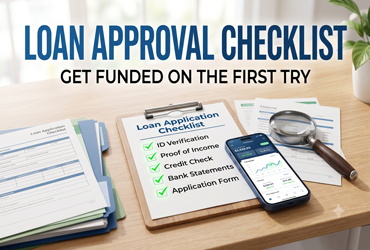
The Ultimate Checklist for Online Loan Approval: Get Funded on the First Try
Applying for a loan online is incredibly convenient, but hitting the "Submit" button before you are fully prepared can lead to instant rejection or higher interest rates. Whether you are facing a medical emergency, covering a sudden car repair, or looking for competitive 5000 dollar loans to consolidate credit card debt, preparation is your absolute best asset.
Today’s online lenders use automated underwriting systems to verify your information in a matter of seconds. If your documents are disorganized, your income is unclear, or your numbers do not line up, your application will be flagged or denied.
Use this comprehensive, step-by-step checklist to gather exactly what you need, avoid common application traps, and get approved on your very first try.
Part 1: Know Your Numbers Before You Apply
Before gathering any physical or digital documents, you need to know exactly where you stand financially. Lenders will evaluate these two critical metrics immediately.
1. Your Credit Score and Report
Knowing your score dictates which tier of lenders you should apply to (Prime vs. Subprime).
Check for Errors: Before applying, pull your free credit report from AnnualCreditReport.com. Dispute any false late payments or accounts you do not recognize.
Optimize First: If your score is on the lower end and the loan is not an absolute emergency, take 30 to 60 days to implement strategies to boost your credit score. Even a 20-point increase can save you hundreds of dollars in interest.
2. Your Debt-to-Income (DTI) Ratio
Lenders use your DTI to determine if you can realistically afford a new monthly payment.
The Formula: (Total Monthly Debt Payments ÷ Gross Monthly Income) x 100 = DTI.
Example: If you earn $4,000 a month before taxes, and you pay $1,200 for rent, $300 for a car loan, and $100 towards credit cards, your total monthly debt is $1,600. Your DTI is 40% ($1,600 ÷ $4,000).
The Target: Traditional lenders prefer a DTI below 36%. However, many online installment lenders specialize in approving borrowers with a DTI up to 50%.
Part 2: The Essential Document Checklist
Having these documents saved as clear PDFs or JPEGs on your computer or smartphone will make the application process seamless and prevent frustrating delays.
1. Proof of Identity
To comply with federal anti-money laundering (AML) laws, lenders must verify you are exactly who you claim to be.
A valid, unexpired Government-issued ID (Driver’s License, State ID, or Passport).
Your Social Security Number (SSN) or Individual Taxpayer Identification Number (ITIN).
Note: Ensure the name on your ID perfectly matches the name on your bank account and application.
2. Proof of Income (By Employment Type)
This is the most critical step. You must prove you have the reliable cash flow required to make the scheduled monthly payments.
Traditional W-2 Employees: Your two most recent pay stubs and your W-2 form from the previous year.
Self-Employed / Freelancers: Your last two years of tax returns (1040 and Schedule C) and the last 3 to 6 months of personal or business bank statements showing consistent deposits.
Gig Economy Workers (Uber, DoorDash, etc.): 1099-K forms, 3 to 6 months of bank statements, and occasionally screenshots of your earnings dashboard.
Alternative Income: Official award letters for Social Security, disability benefits, pensions, or court-ordered alimony/child support.
3. Proof of Residence
Lenders need to confirm your physical address matches your credit profile.
A recent utility bill (water, gas, electricity, or internet) in your name, dated within the last 60 days.
A current lease agreement or recent mortgage statement.
Part 3: Digital Banking and Verification
Online lenders disburse funds digitally. Therefore, your banking setup needs to be ready to receive the money and handle automated, recurring repayments.
Active Checking Account Details: You will need your exact account number and routing number. The account must be in your name and ideally active for at least 90 days.
Open Banking Connections (Plaid/Finicity): Many modern online lenders no longer ask for PDF bank statements. Instead, they will ask you to log into your bank through a secure third-party portal like Plaid. This allows the lender to instantly verify your income and banking history with read-only access. It is safe, encrypted, and significantly speeds up approval times.
Employer Contact Information: Have your HR department's phone number and corporate address ready. Lenders may perform a quick, discrete verification call to confirm you are actively employed.
Part 4: The "Soft Pull" Strategy
When shopping for a loan, never submit multiple full applications at once.
Look specifically for lenders that offer "Pre-qualification." This process uses a Soft Credit Pull, which allows you to see your estimated interest rate and loan amount without damaging your credit score.
Only proceed with a full application (which triggers a Hard Credit Pull and briefly lowers your score) once you have compared multiple pre-qualified offers and chosen the absolute best one.
Even with perfect documentation, certain recent behaviors can trigger an automatic denial by a lender's algorithm.
⚠️ Red Flags to Avoid Before Applying
Even with perfect documentation, certain recent behaviors can trigger an automatic denial by a lender's algorithm.
Recent Bounced Checks or Overdrafts: A history of Non-Sufficient Funds (NSF) fees on your bank statements signals severe financial instability.
Inconsistent Income: If your bank statements show large gaps between deposits, lenders may view your income as too volatile.
Too Many Recent Hard Inquiries: Applying for five different credit cards or loans in one week makes you look financially desperate and highly risky.
Conclusion
Getting approved for a loan does not have to be a stressful guessing game. By checking your credit report, organizing your specific income documents, and ensuring your bank account is in excellent standing, you position yourself as a highly reliable, low-risk borrower.
Complete this checklist, compare your pre-qualified options between an installment loan vs payday loan, and secure the funding you need with absolute confidence.